
Gdańsk, Poland | 14 September 2026
How do you prepare people for a crisis before it happens?
Knowing emergency procedures is one thing. Experiencing a realistic crisis scenario, making decisions and discussing their consequences is something completely different.
In Gdańsk, SimuDome presented an interactive immersive training and blackout simulation designed for civil protection, public safety, emergency preparedness and crisis management training.
The project demonstrated how immersive simulations, interactive 360° content and shared VR training environments can be used to prepare groups for real-world emergency situations.
Instead of passively learning procedures, participants entered a realistic crisis management simulation, followed a developing emergency scenario, made decisions and discussed their consequences with an instructor.
No individual VR headsets were required. The entire group experienced the simulation together inside one shared immersive environment.
THE CHALLENGE – TRAINING FOR SITUATIONS WE CANNOT SAFELY RECREATE
A large-scale blackout can affect much more than electricity.
Communication, access to reliable information, water supply, payments, transportation and other essential services may become disrupted. As the situation develops, people need to understand how to protect themselves, support others and make informed decisions.
At the same time, real emergency situations are difficult, expensive or simply impossible to recreate safely during conventional training.
This creates a challenge for civil protection and crisis management training: how can we prepare people for situations they have never experienced?
Simulation-based and immersive training provides a way to recreate the context of an emergency in a controlled environment.
INTERACTIVE IMMERSIVE TRAINING IN SIMUDOME
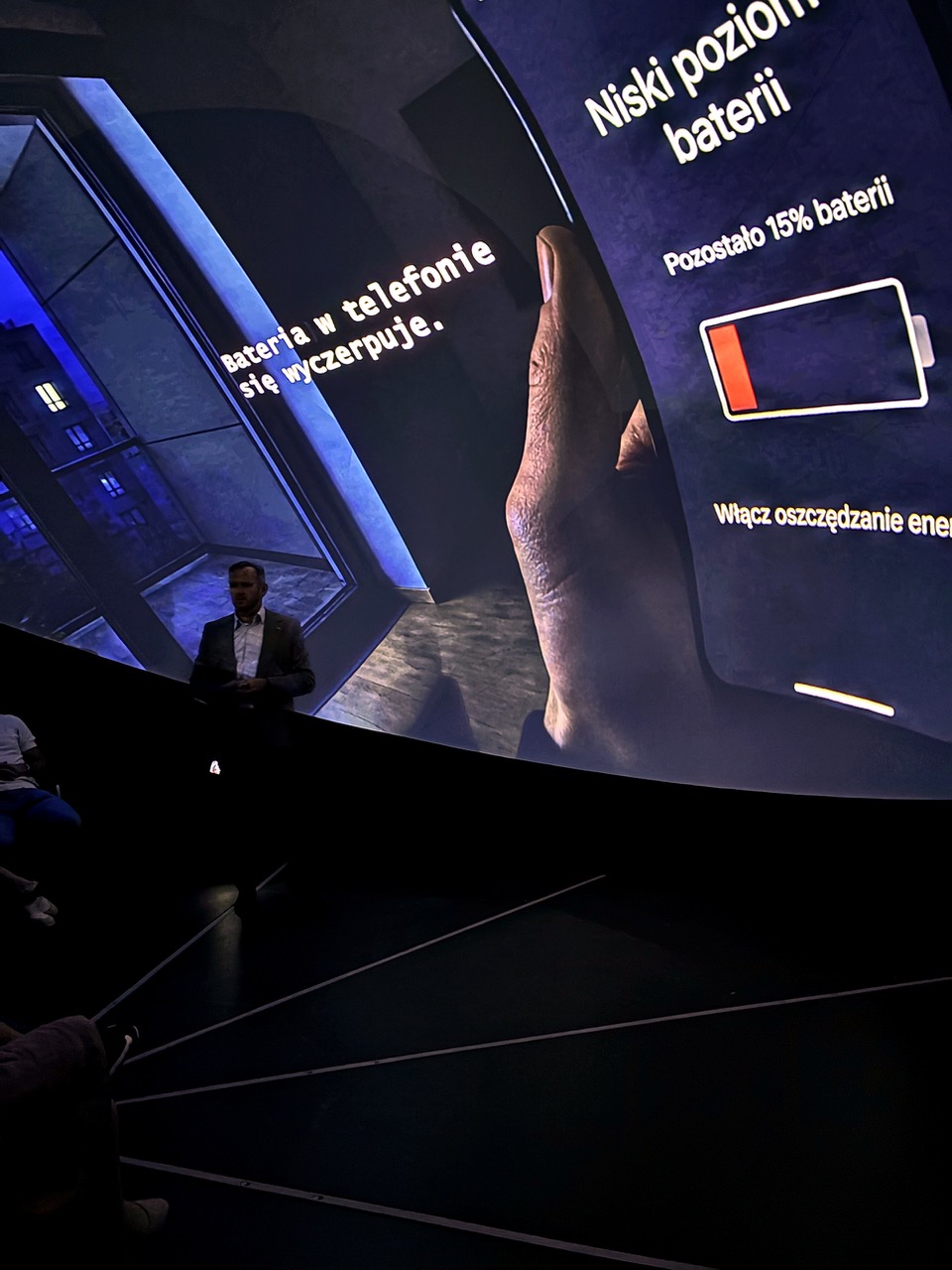
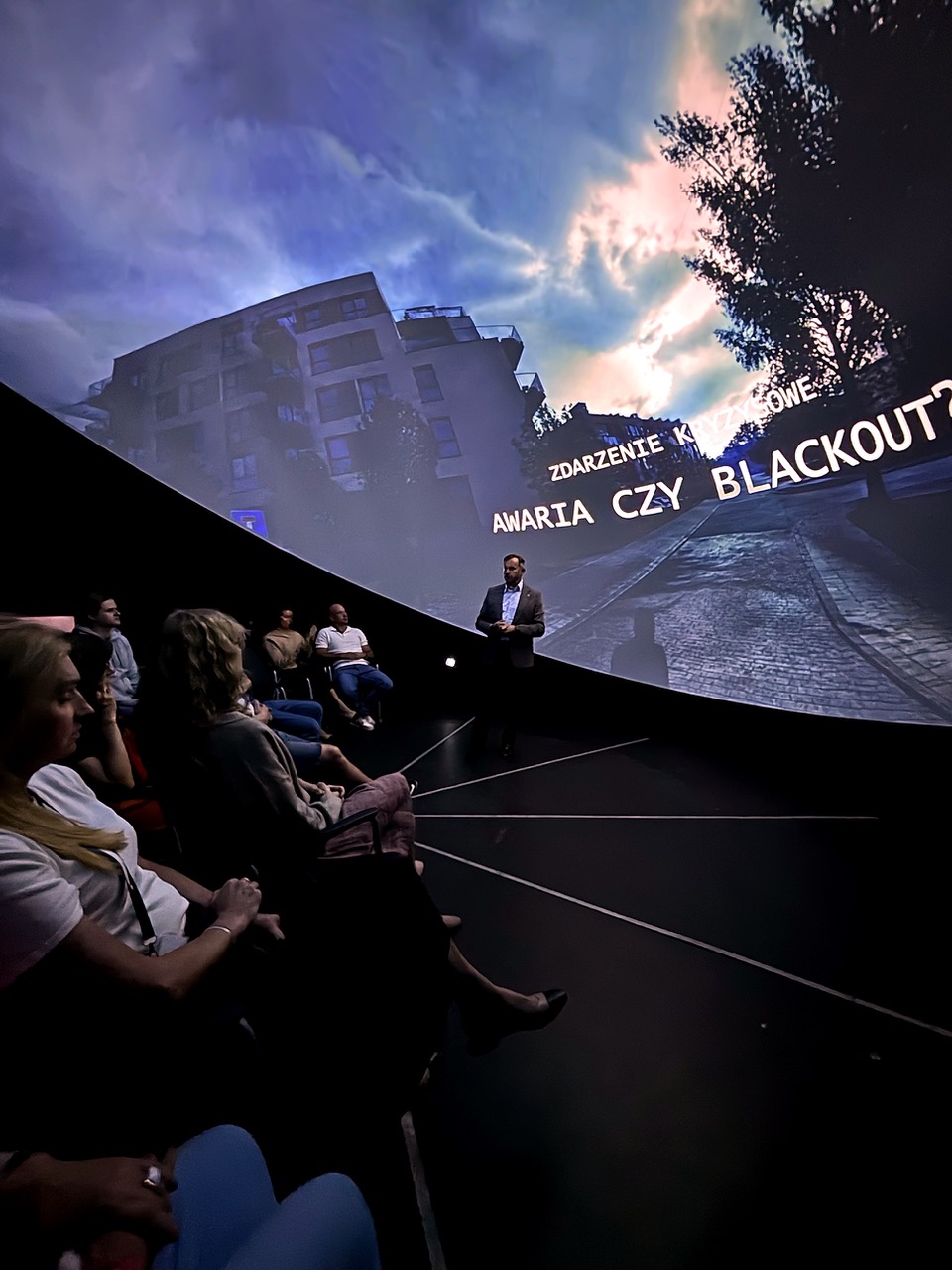
For the Gdańsk demonstration, we developed an interactive blackout simulation and presented it inside the SimuDome 360° immersive training environment.
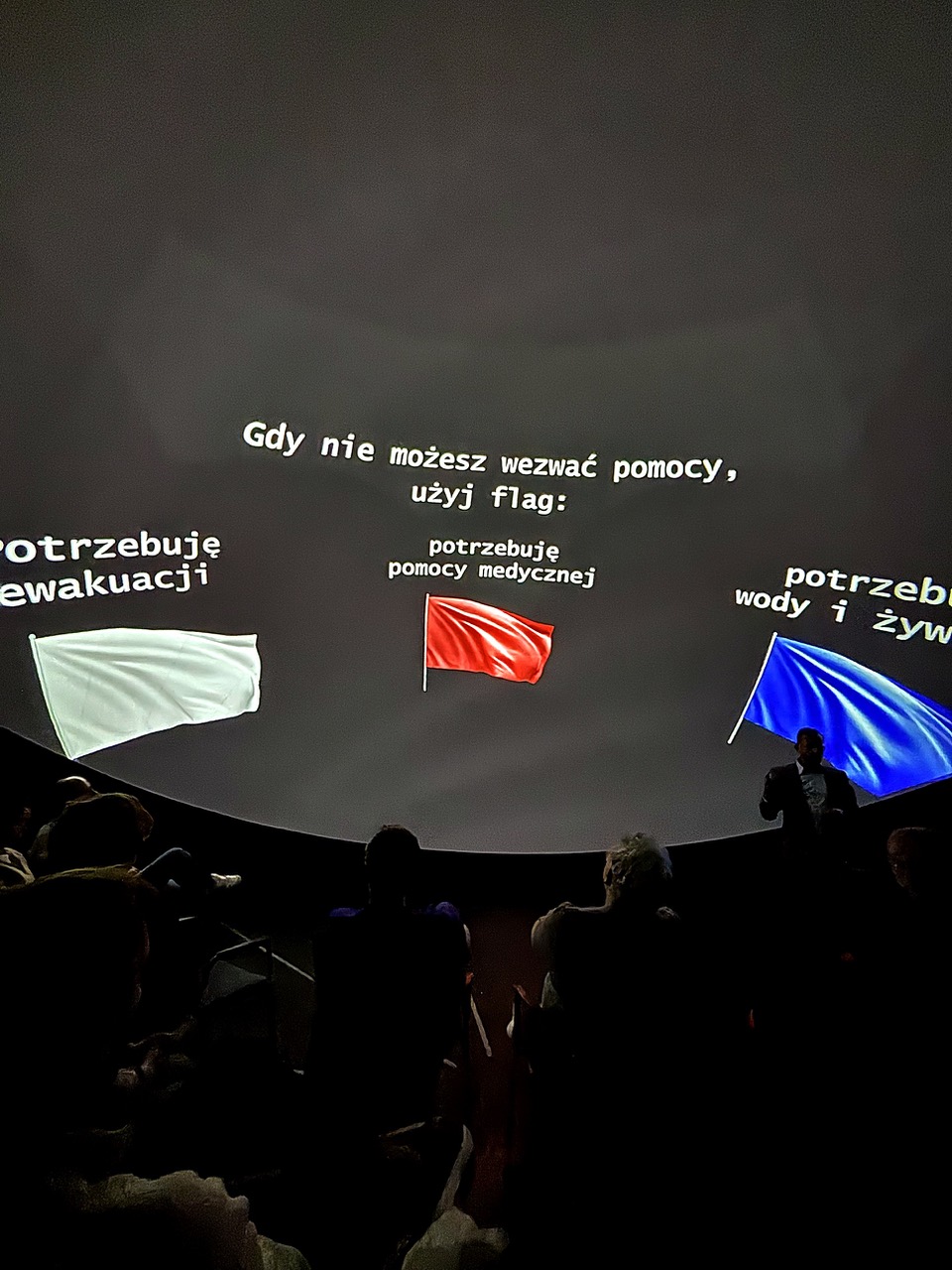
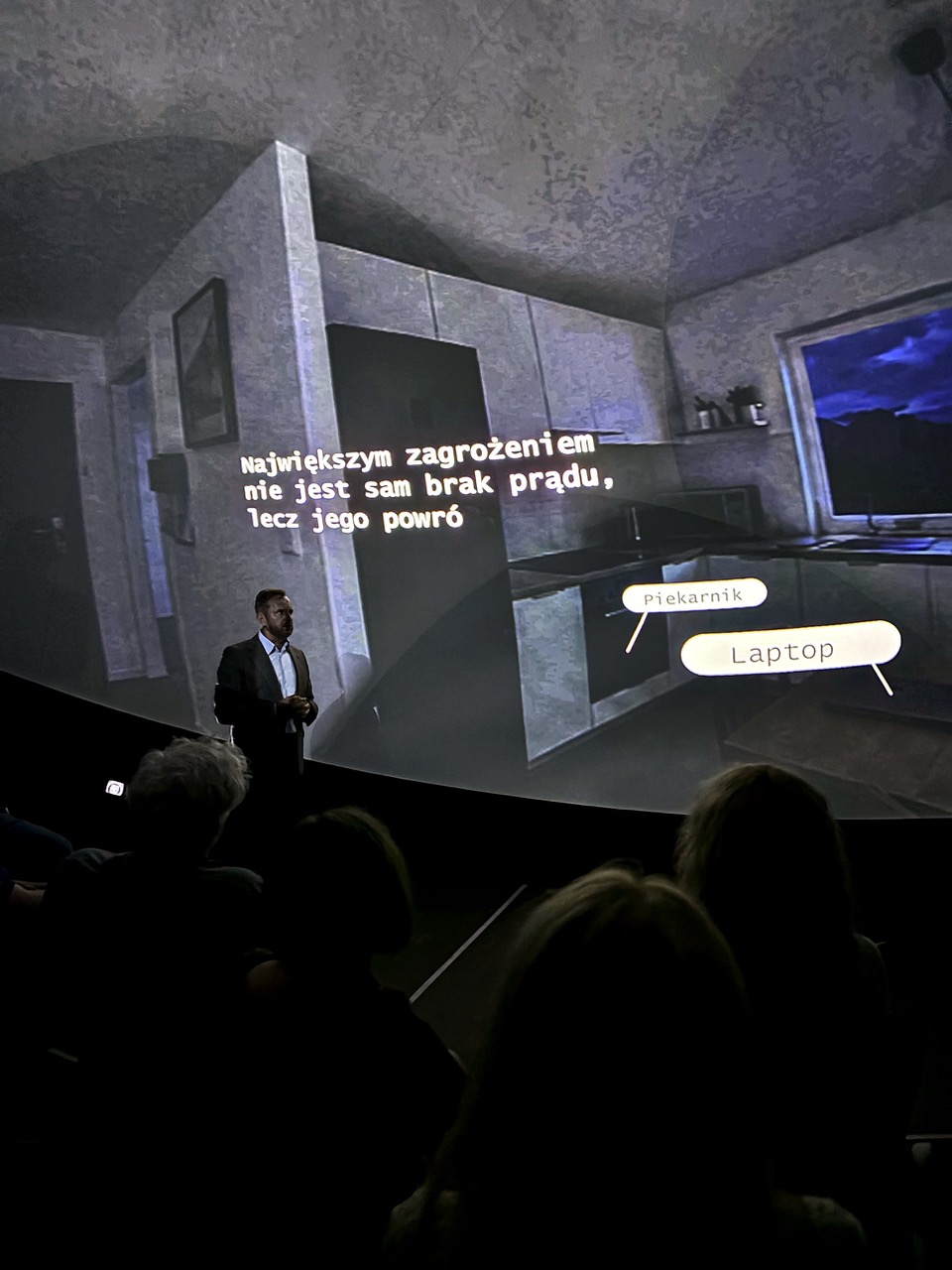
The audience was surrounded by spherical projection and immersive audiovisual content, while an instructor guided participants through the developing crisis.
The scenario began in a familiar urban environment.
Then the power went out.From that moment, participants had to consider what they would actually do.
Where do you look for reliable information?
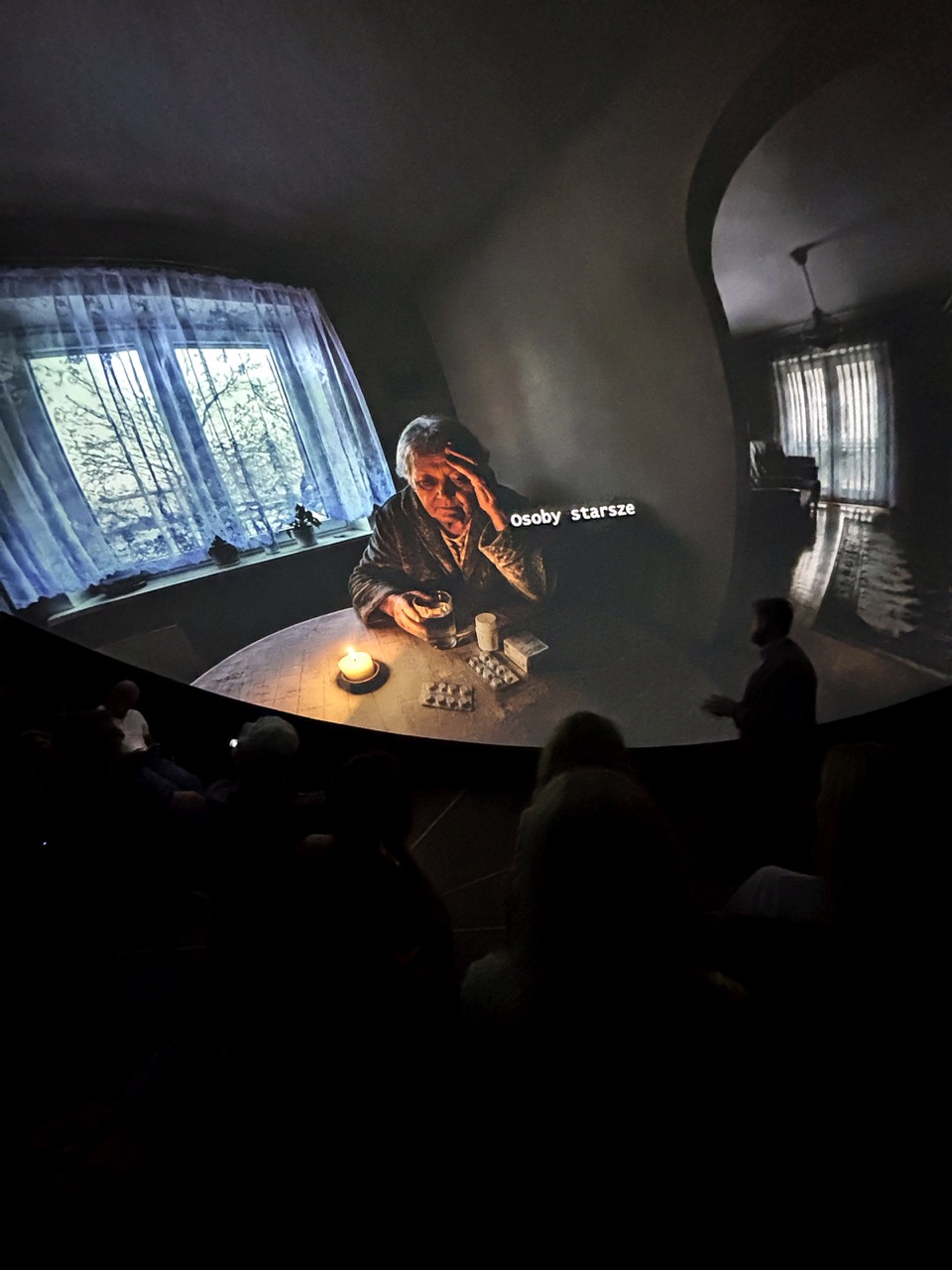
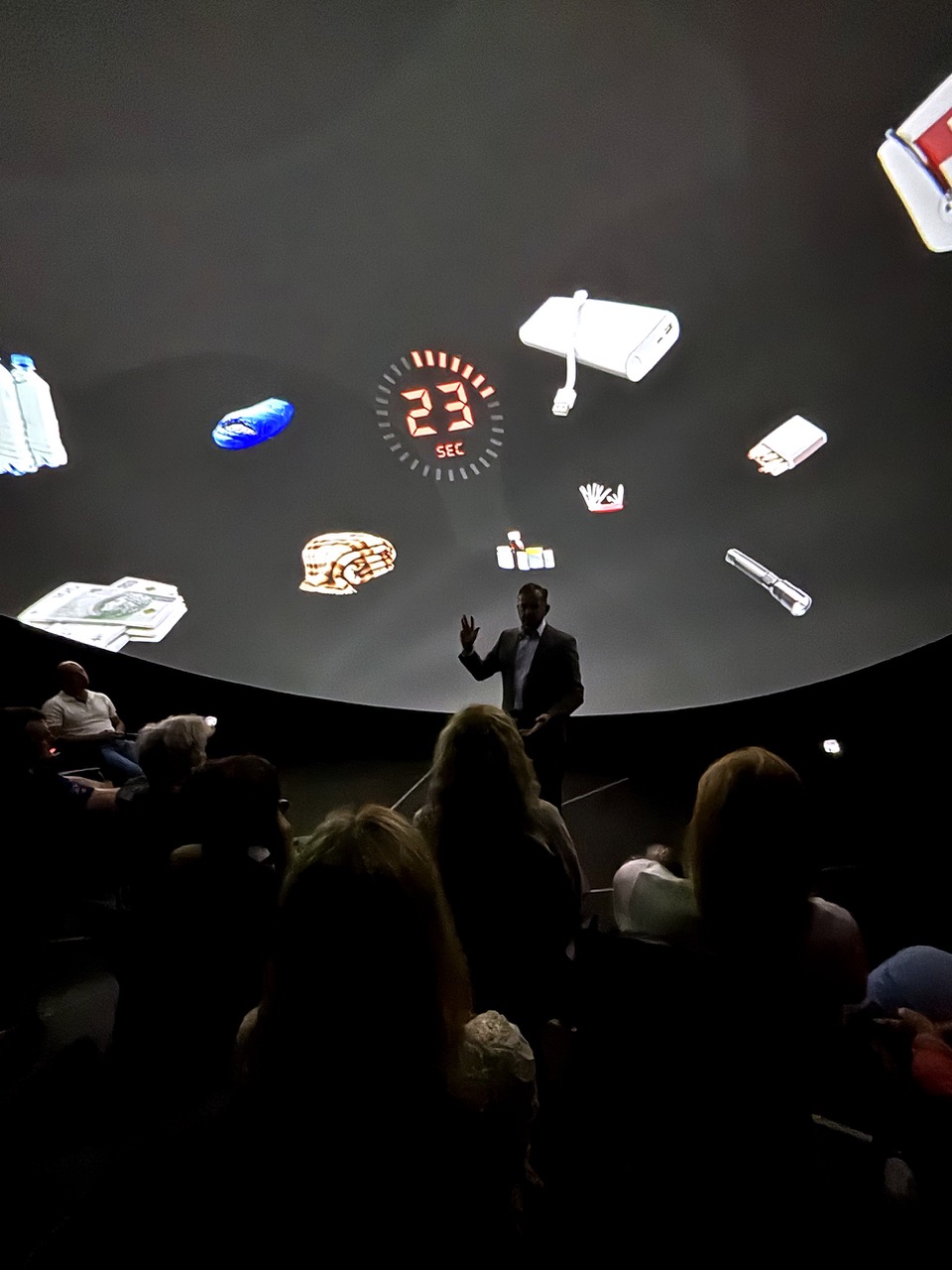
Do you have enough water and essential supplies?Who around you may require additional assistance?
Should you stay where you are or evacuate?
How do you protect your family when communication and basic services are disrupted?
The objective was not simply to show a crisis.
The objective was to train people to think, react and make decisions within a realistic simulated situation.
INTERACTIVE TRAINING, NOT PASSIVE VIEWING
The blackout experience was designed as an interactive immersive training session, not simply a 360° film.
At key moments, participants were presented with questions and possible actions. Their responses became part of the training process.
The instructor could pause the scenario, discuss decisions, explain recommended behaviour and analyse possible consequences together with the group.
This approach combines:
- immersive 360° simulation,
- interactive training content,
- scenario-based training,
- simulation-based learning,
- decision-making exercises,
- instructor-led training,
- group participation,
- discussion and knowledge verification.
The result is a shared immersive training environment where participants can experience the same emergency simulation and learn together.
IMMERSIVE TRAINING AND SIMULATION FOR CRISIS MANAGEMENT
Blackout is only one possible scenario.
The same SimuDome infrastructure can support a library of immersive crisis management simulations and interactive safety training scenarios, including:
- power and water outages,
- floods and flash floods,
- extreme weather,
- fires,
- evacuation scenarios,
- infrastructure failures,
- emergency alerts and crisis communication,
- household emergency preparedness,
- emergency supplies and evacuation kits,
- supporting vulnerable people during emergencies,
- misinformation and verification of reliable information,
- civil protection scenarios,
- emergency response exercises.
Training scenarios can be adapted to the risk profile of a specific city, municipality, organisation, industrial facility or community.
One immersive training platform can therefore support multiple scenarios without changing the physical infrastructure.
WHY IMMERSIVE AND SIMULATION-BASED TRAINING?
Traditional safety training often explains what people should do.
Immersive simulation allows them to experience the context in which those decisions may need to be made.
SimuDome combines immersive training technology, interactive content and instructor-led simulation in one shared environment.
Unlike individual VR systems, participants do not need to wear headsets. An entire group can see the same situation, communicate, make decisions and discuss the scenario together.
This makes SimuDome particularly relevant for:civil protection training, crisis management training, public safety training, emergency preparedness, emergency response exercises and interactive safety simulations.
The shared environment also allows instructors, experts and participants to remain in direct contact throughout the exercise.
SHARED VR – TRAINING TOGETHER
SimuDome is based on the concept of Shared VR.
Instead of isolating each participant inside an individual headset, the technology creates a large-scale immersive environment in which the whole group shares the same virtual scenario.
Participants can see each other, communicate naturally and react to the same events.
For crisis management and safety training, this enables not only individual learning but also group decision-making, communication and discussion within a simulated emergency situation.
MOBILE IMMERSIVE TRAINING CENTRE
The technology can also operate as a mobile immersive training centre.
A SimuDome installation can be deployed in different cities and communities while using the same technological infrastructure and a growing library of interactive training scenarios.
This creates the possibility of delivering immersive civil protection and emergency preparedness training directly to local communities, while adapting content to local risks and requirements.
FROM INFORMATION TO EXPERIENCE
The purpose of immersive crisis training is not to make emergencies more spectacular.
It is to make preparedness more tangible.
A realistic simulation creates an environment where participants can experience a crisis scenario before facing one in real life, make decisions in a controlled setting and discuss appropriate responses.
The Gdańsk demonstration showed how interactive immersive training, 360° simulation and Shared VR technology can support a new approach to civil protection, safety and crisis management education.
Because when a real crisis happens, the first time you think about what to do should not be during the crisis itself.