
A digital twin of a building, industrial facility or urban infrastructure no longer has to remain an experience locked inside a VR headset. With SimuDome, a virtual environment can be transferred to an immersive dome and experienced by an entire group at the same time.
This is no longer just a concept. It is a tested and fully operational SimuDome capability.
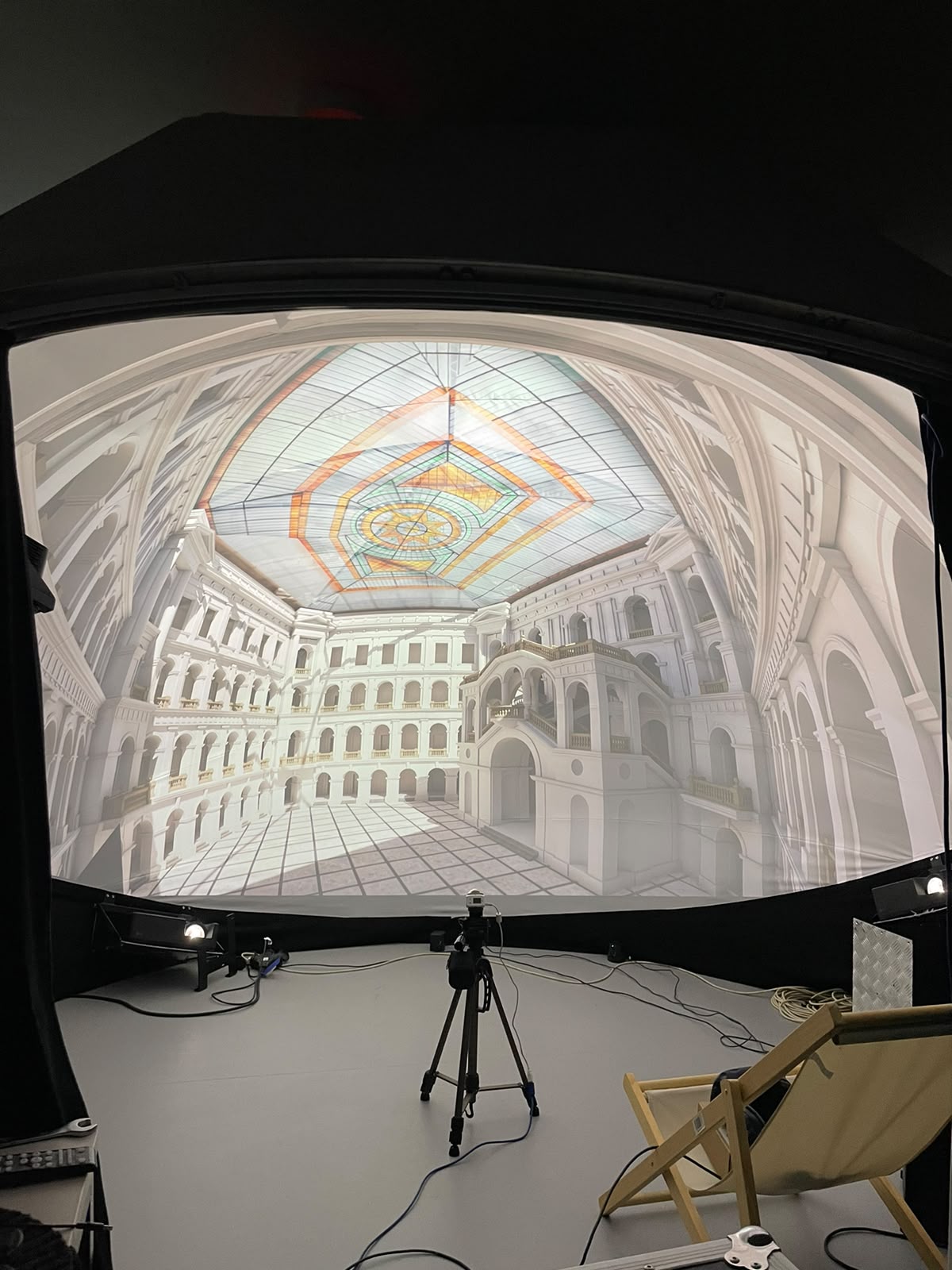
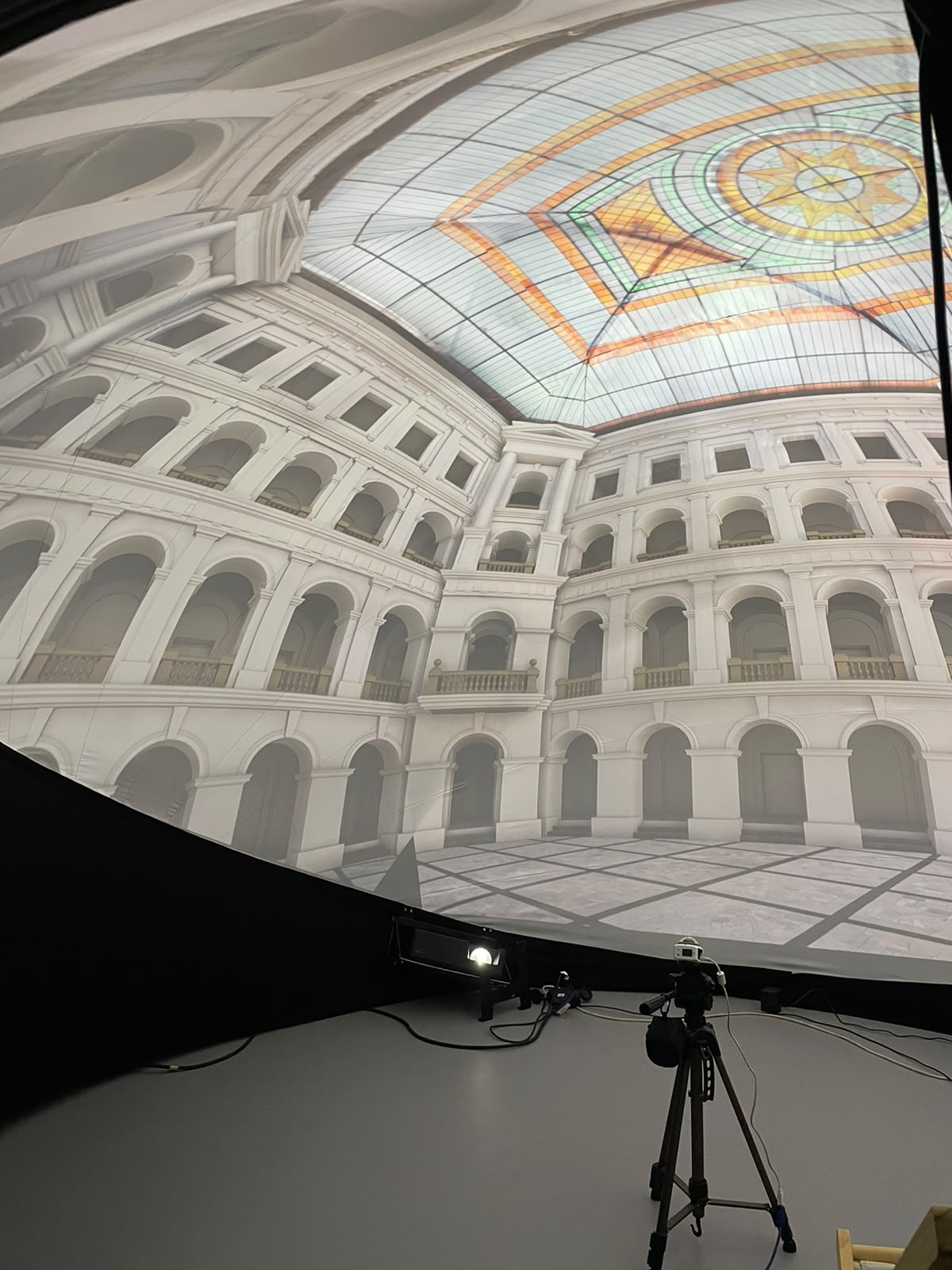
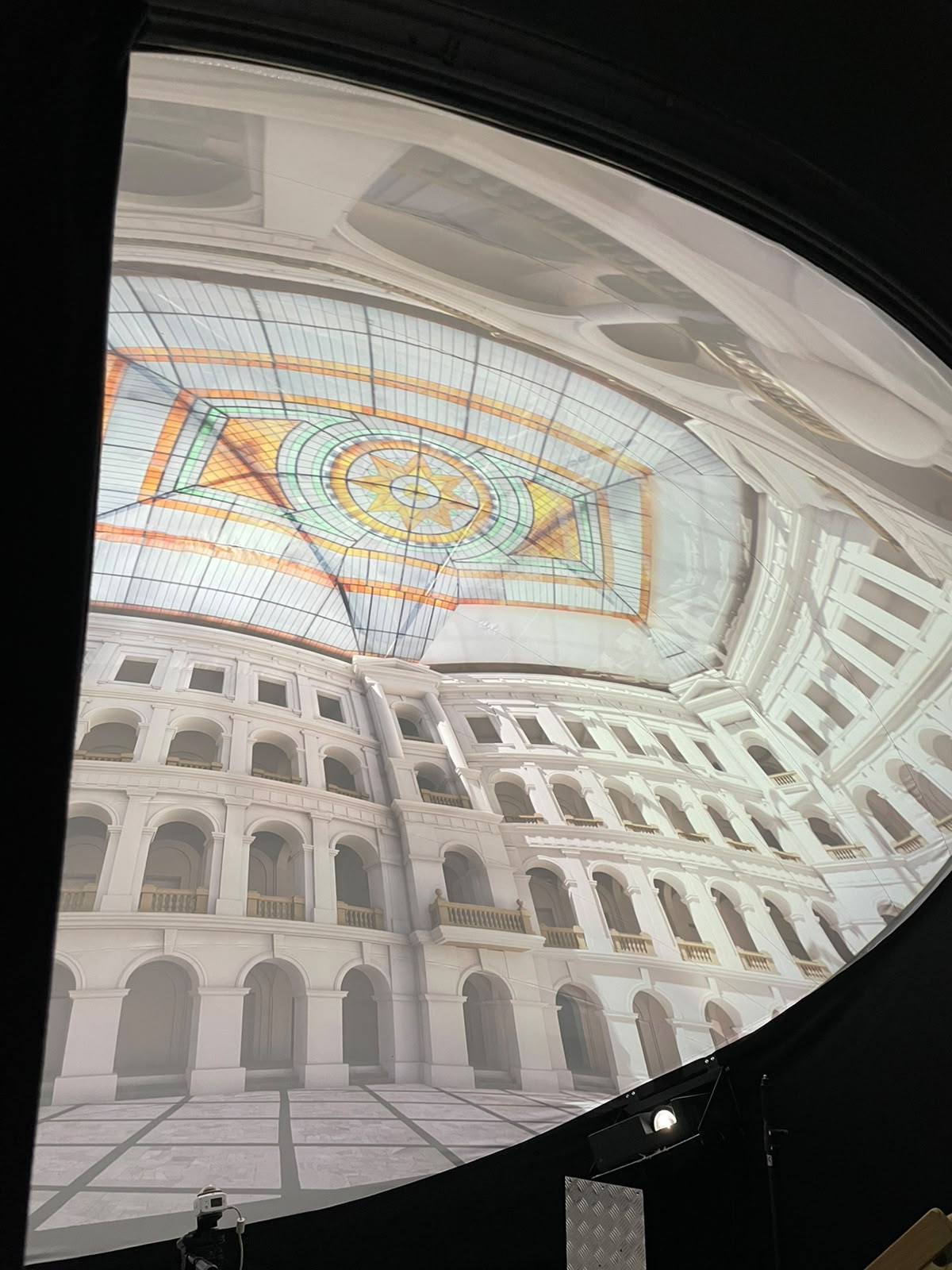
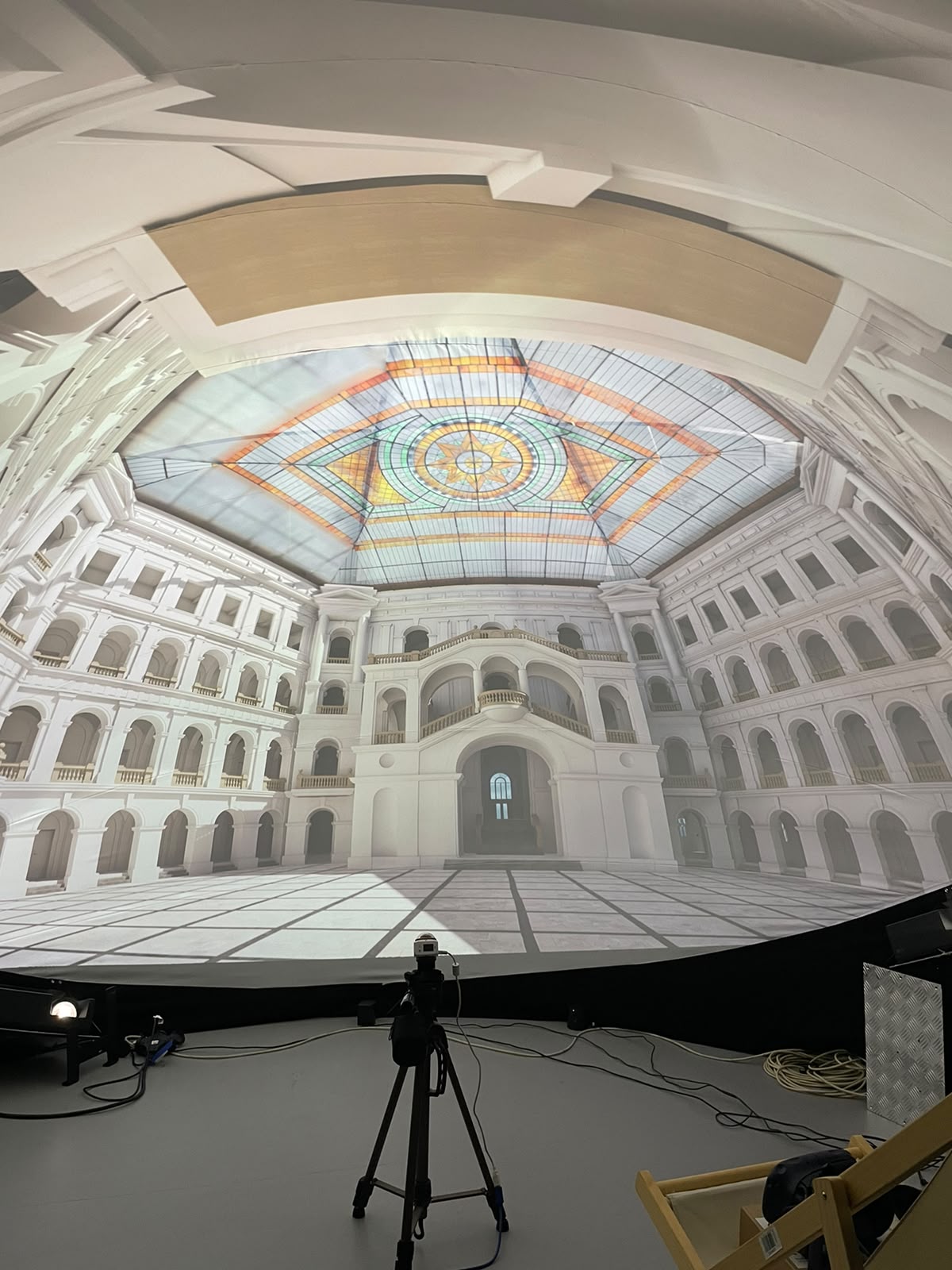
During our latest tests, we transferred an interactive 3D building model into the SimuDome environment. Users can enter its virtual interior, look around, move through different parts of the building and explore the projected environment together.
A building that was previously accessible to one person through a computer screen or VR headset has become a shared, immersive space.
Do not limit your digital twin to VR headsets
VR headsets allow an individual user to enter a virtual world. In many business, industrial and public-sector applications, however, organisations need more than an individual experience.
They need a space where people can:
- explore a digital twin together,
- present a planned investment,
- analyse industrial and urban infrastructure,
- discuss operational scenarios,
- conduct immersive training,
- support collaborative decision-making,
- organise virtual site visits,
- present projects to clients, residents, investors and partners.
SimuDome changes the way organisations use VR content. Instead of equipping every participant with an individual headset, we bring the virtual environment into a shared projection space.
Everyone can see the same world, communicate naturally and respond to the displayed content together. The presenter controls the experience and directs the group’s attention to selected locations, assets or events.
This is the transition from VR to Shared VR.
One virtual world for the entire group
3D environments developed using game engines, including Unity and Unreal Engine, can be adapted for presentation in SimuDome. An existing digital twin, building model or interactive simulation can therefore gain an entirely new way of being experienced and used.
The content is no longer confined to a headset or flat display. It surrounds the participants and becomes a shared environment.
In our demonstration, users can navigate through a digital model of a building and observe its architecture from different perspectives. The large projection surface fills their field of view, creating a strong sense of scale, depth and presence inside the virtual facility.
The most important difference is that this world is no longer experienced by just one person. It can be seen and explored by the whole group.
Do you already have a digital twin? Show it to others
Companies and public institutions are increasingly digitising their physical infrastructure. They are developing BIM models, architectural visualisations and digital twins of buildings, factories, campuses, public facilities, cities and critical infrastructure.
The challenge begins when these models need to be presented to a larger group.
A computer screen cannot fully communicate the scale of a space. VR headsets isolate participants and make group discussion more difficult. A conventional presentation limits interaction and does not allow participants to truly enter the designed environment.
SimuDome opens the digital twin to project teams, clients, investors, facility operators, decision-makers and training groups.
Who is Shared VR for?
The SimuDome Shared VR solution is designed for organisations that own, operate or develop digital models of their infrastructure, including:
- manufacturing facilities and logistics centres,
- property owners and facility management teams,
- cities and local governments,
- critical infrastructure operators,
- energy companies and utility providers,
- universities and research institutions,
- museums and cultural institutions,
- architecture and engineering companies,
- property developers and investors,
- public safety and emergency services,
- organisations delivering technical and operational training.
One digital environment, multiple applications
The same digital model can support many different use cases.
It can provide a virtual building tour, even before the building is constructed or opened to the public. It can be used to present a project to investors, clients, residents, facility operators or management teams.
It can also become a training environment. Inside a digital twin, participants can review evacuation routes, emergency exits, hazardous areas, traffic flows and crisis response procedures. SimuDome can therefore support evacuation training, fire safety training, crisis preparedness and emergency response training.
In industrial applications, the shared environment can help employees become familiar with a facility, plan work, prepare for entering a restricted site, analyse operational processes and review planned modifications. It can support occupational health and safety training, employee onboarding, maintenance planning and Industry 4.0 initiatives.
For cities and public institutions, the technology can support Smart City solutions, urban planning, infrastructure presentations, public consultation and collaborative analysis of the urban environment.
For architecture, engineering and construction teams, it creates a new way to review BIM data, present designs, identify spatial issues and discuss a project with clients and stakeholders.
From a 3D model to a shared experience
SimuDome does not replace your digital twin. It expands the ways in which it can be used.
It combines an existing 3D environment with large-scale immersive projection and interactive navigation. As a result, the digital model is no longer just a technical file, a visualisation displayed on a monitor or an experience accessible only through a VR headset.
It becomes a place where people can meet around the same data, the same space and the same objective.
Do you have a digital twin of a building, industrial facility or infrastructure asset? Show it to others.
Turn VR into Shared VR.
Launch your digital twin in SimuDome and create a shared virtual space for exploration, project presentations, training, analysis and collaborative decision-making.
How could your organisation use this shared virtual space?